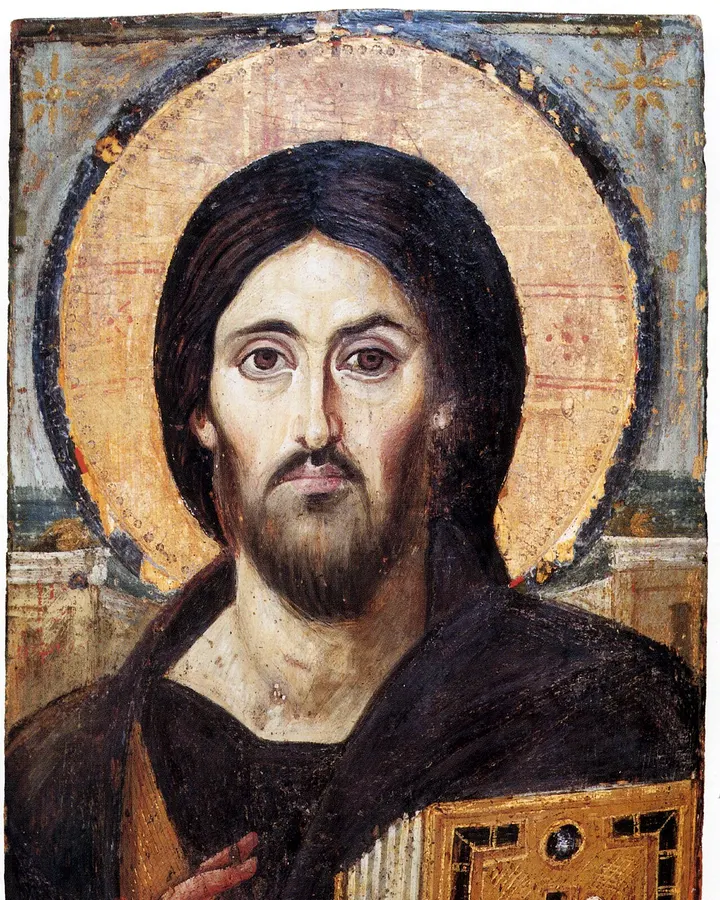
In the beginning was the Word
Faith, a loving response to the Word
“He said to them, ‘But who do you say that I am?’ Simon Peter replied, ‘You are the Christ, the Son of the living God.’”
Matthew 16:15–16
I am a slave of Jesus Christ, a Christian. I’m Catholic. I believe everything the Catholic Church teaches. I say I “believe” in the sense that I “love”, not merely that I “accept” Catholic doctrine. Mere notional acceptance is good, but not good enough, and undoubtedly problematic when it sits side by side with stubbornness in sin as it did in me for most of my life: “You believe that God is one; you do well. Even the demons believe—and shudder.” (James 2:19). But now I love Our Lord. So when I say in the Creed at Mass, “I believe in one Lord Jesus Christ, the Only Begotten Son of God”, in my heart I say “I love Jesus Christ.”
“A dogma is a proposition; it stands for a notion or for a thing; and to believe it is to give the assent of the mind to it, as it stands for the one or for the other. To give a real assent to it is an act of religion; to give a notional, is a theological act. It is discerned, rested in, and appropriated as a reality, by the religious imagination; it is held as a truth, by the theological intellect.”
My faith is weird! So I empathize with anyone who finds my credence childish or naive, or even crazy. I do see logic in Catholic doctrine, but the claims are outlandish. I’m not sure which of them is most weird: is it the fact that God is one in essence, three in persons - Father, Son, and Holy Spirit? Is it that he is absolutely simple? Simple to the point that his existence is exactly the same as his essence - so he can’t not exist? Is it that he is beyond every definition and concept, even as I list theological assertions about him? Is it that the Father created the universe out of nothing, and did so through his Son, the same Son who became incarnate in the womb of the Virgin Mary? Is it that this Son willingly sacrificed himself and died for my sake after hanging in agony for several hours nailed to a cross? Is it that God announced a rescue plan immediately after the rebellion of our first parents Adam and Eve, and was steadfast in this salvific plan through a few thousand years of close relationship with the chosen people - the Jewish people? Or is it that Jesus rose from the dead on the third day just as he said he would? Or finally that, though he ascended into heaven, he is still with us and will remain with us till his glorious return at the end of time (Matthew 28:20), disguised as bread?
“In the beginning was the Word, and the Word was with God, and the Word was God. He was in the beginning with God; all things were made through him, and without him was not anything made that was made. In him was life, and the life was the light of men. The light shines in the darkness, and the darkness has not overcome it. … And the Word became flesh and dwelt among us, full of grace and truth; we have beheld his glory, glory as of the only Son from the Father.”
John 1:1–5, 14
Catechism of the Catholic Church, 292“The Old Testament suggests and the New Covenant reveals the creative action of the Son and the Spirit, inseparably one with that of the Father. This creative co-operation is clearly affirmed in the Church’s rule of faith: ‘There exists but one God. . . he is the Father, God, the Creator, the author, the giver of order. He made all things by himself, that is, by his Word and by his Wisdom’, ‘by the Son and the Spirit’ who, so to speak, are ‘his hands’. Creation is the common work of the Holy Trinity.”
Jesus is the second person of the Holy Trinity. So he is God and man at the same time - one divine person with two natures - divine and human. The purpose of his incarnation, death, and resurrection was to “save” us. Salvation is a word we have heard thrown around so much that it probably doesn’t astonish as it should. Perhaps this is because we don’t quite appreciate our dilemma. Again I empathize. Not having seen God I can’t appreciate what I’m missing (1 Corinthians 2:9). But still we have to reflect on the simple but awful drama of our lives being wounded to the degree that we are born as walking dead. Salvation denotes a return to health. But Christ does not merely make us “better”. He resuscitates us! When Adam and Eve sinned, they died spiritually. They lost the life of God in their souls.
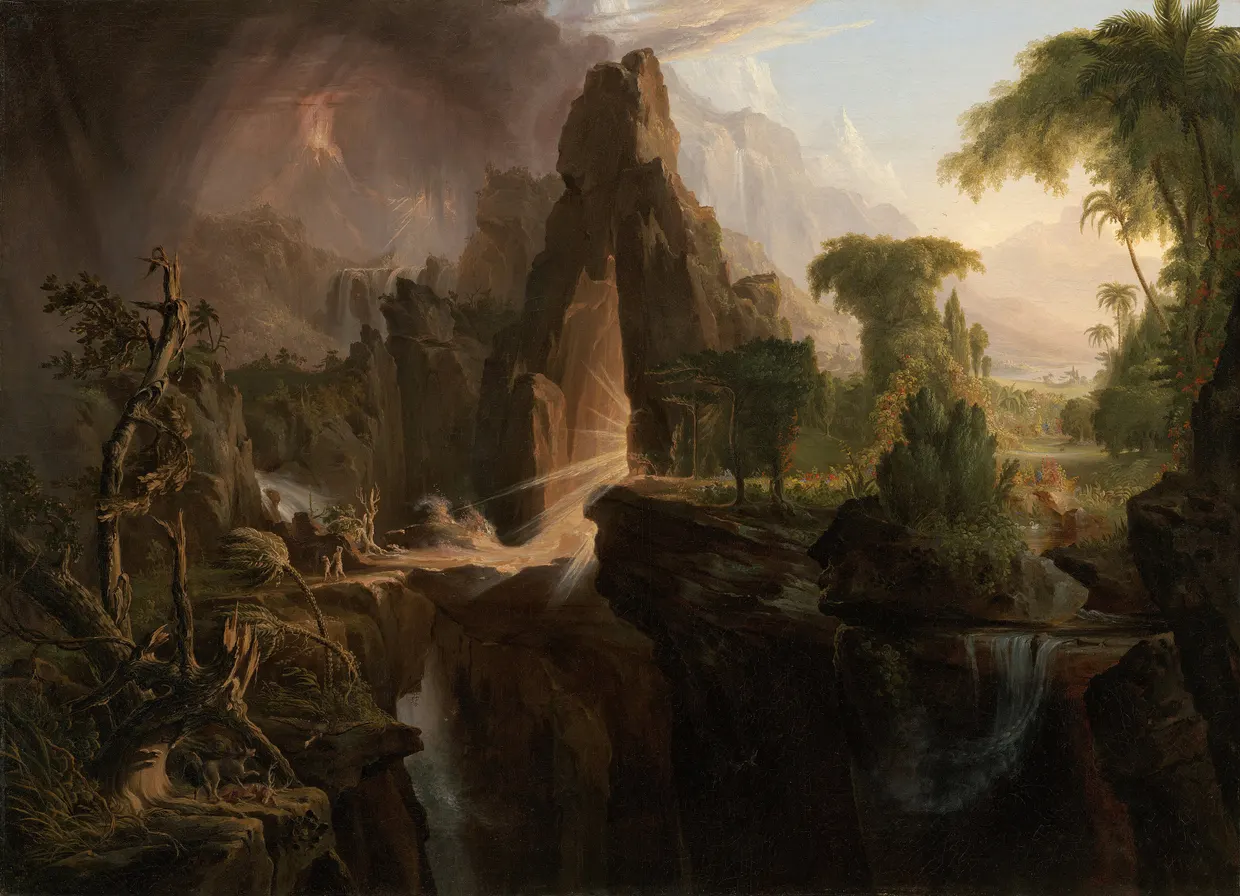
I think one way of looking at sin, which is first an offense against God, is to see it also as any damage we do to ourselves or others, whether physically or spiritually. Perhaps this is what causes the offense to God. The claim that we inherit this state of sin from our first parents I may find hard to digest but logical nevertheless. This is what we Christians refer to as original sin. The damage Adam and Eve inflicted on themselves was catastrophic. It robbed them of the friendship they enjoyed with God: “Where are you?” (Genesis 3:9). Put another way they lost their share in the divine nature and their potency to pass it on to their offspring. As a consequence I was conceived with this deadly impoverishment. This is the heart of our drama - we can’t see God and we can sin. We can’t see God because we sin and we sin because we can’t see God (consider “seeing” in its deepest sense of “knowing”). But the fact that we don’t know God is primarily an ontological problem. We are incapable of knowing him as he is because of sin.
Our Lord’s rescue operation entailed divinizing us - making us participate in his own nature (2 Peter 1:4) - thus making us capable of knowing him, and loving him! He gives us the Holy Spirit, who breathes his own life into our souls! He personally does this through the liturgical life of the Church in the seven Sacraments. Baptism restores the divine nature to our souls. But we still have a maturity problem to deal with. This also incapacitates us. So even though we have had the divine nature restored to us, we have the limiting aspect of our lack of maturity in Christ. Holy Communion - the Eucharist - solves that problem. The more we nurture ourselves with Christ’s own body and blood, the more we grow in maturity till we eventually reach the fulness of maturity and enter into heaven - the beatific vision.
Catechism of the Catholic Church, 1028“Because of his transcendence, God cannot be seen as he is, unless he himself opens up his mystery to man’s immediate contemplation and gives him the capacity for it. The Church calls this contemplation of God in his heavenly glory ‘the beatific vision’: How great will your glory and happiness be, to be allowed to see God, to be honored with sharing the joy of salvation and eternal light with Christ your Lord and God, . . . to delight in the joy of immortality in the Kingdom of heaven with the righteous and God’s friends.”
“Beloved, we are God’s children now; it does not yet appear what we shall be, but we know that when he appears we shall be like him, for we shall see him as he is.”
1 John 3:2
So the Sacraments, these “efficacious signs of grace, instituted by Christ” (CCC 1131), are perhaps where my faith is at its weirdest. That Our Lord would give men - some as malicious or idiotic as I am and others more or less so - the power to restore the life of God to dead and sick souls (John 14:12) is strange enough! But that the priests would have to use words and signs out of necessity is even stranger. And that everything must rest on the Sacraments, with their power far beyond the reach of my greatest efforts! My efforts are essential, it’s true: I must not sin again (John 8:11) - a sincere Confession will restore me to divine life in Christ if I do - but my efforts are not primary. What comes first is my encounter, as a sick or dead man, with my Saviour, Jesus Christ in the Sacraments: I open my mouth to receive the food and medicine he administers to me invisibly through the priest (sick or dead himself perhaps, but that’s none of my business). So the power at work in these signs of water and oil and bread and wine and words is divine, because it’s Christ who acts through them. What makes it so weird is that it has to be so! Still I see logic there! It helps to consider God’s hiddenness to be a function of my blindness or ill health rather than of his preference, and his use of these visible signs to be almost like braille for the blind! I just don’t expect the sacramental economy to make any more sense than it does. I’m the one who’s sick after all. So I’ll just do what he says (John 2:5). His words are what I rest on. He is the Word - the Logic - of God. That’s enough for me.
“As he passed by, he saw a man blind from his birth. And his disciples asked him, ‘Rabbi, who sinned, this man or his parents, that he was born blind?’ Jesus answered, ‘It was not that this man sinned, or his parents, but that the works of God might be made manifest in him. We must work the works of him who sent me, while it is day; night comes, when no one can work. As long as I am in the world, I am the light of the world.’ As he said this, he spat on the ground and made clay of the spittle and anointed the man’s eyes with the clay, saying to him, ‘Go, wash in the pool of Siloam’ (which means Sent). So he went and washed and came back seeing.”
John 9:1–7
“‘He spat on the ground,’ He made clay of His spittle; for the Word was made flesh. ‘And He anointed the eyes of the blind man.’ … Accordingly he washed his eyes in that pool which is interpreted, Sent — he was baptized in Christ.”